
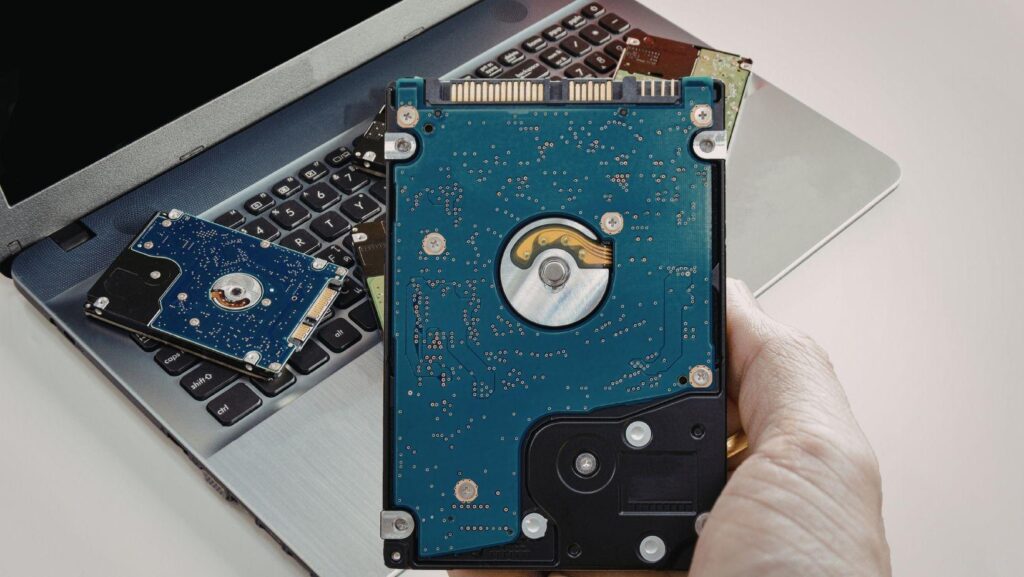
Old hard drives should never be treated as ordinary waste. Even after they stop being useful in production, they can still contain sensitive data and materials that require careful handling at the end of life.
Responsible recycling matters because it reduces the environmental risks tied to improper disposal, supports safer recovery of reusable materials, and helps organizations handle retired storage equipment in a more controlled way.
This article explains the environmental concerns linked to hard drive disposal, the value of recycling and reuse, and the certifications and internal practices that support a safer process.
Environmental Impact and Hard Drive Recycling Considerations
Hazardous Materials in Hard Drives
Hard drives contain metals, circuit boards, plastics, and other components that should not simply be sent to a landfill or handled through informal disposal channels. The environmental issue is not just the presence of materials, but the fact that electronics need controlled processing to avoid unsafe waste handling and to recover useful materials properly.
The Global E-waste Monitor 2024 describes e-waste as one of the fastest-growing solid waste streams, which is why structured recycling systems matter.
Company IT teams may consider partnering with Big Data Supply since they buy used corporate hard drives in bulk and pair that with secure data destruction and recycling support, making it a practical option for organizations clearing out old hardware
E-Waste Volume and Landfill Issues
The scale of electronics waste makes proper recycling more important, not less. According to the Global E-waste Monitor 2024, the world generated 62 million tonnes of e-waste in 2022, and only 22.3% was documented as formally collected and recycled in an environmentally sound manner.
That leaves a large volume of electronics outside formal recovery systems, increasing the risk of lost materials and poor environmental outcomes.
For hard drives specifically, landfill disposal is a weak end-of-life option because it does nothing to recover usable materials and does not address secure handling in the way a structured ITAD or certified electronics recycling process can.
This is why businesses are generally better served by formal recycling or buyback programs than by treating storage devices as low-value scrap.
Material Recovery and Circular Economy Benefits
Responsible electronics recycling supports material recovery and reuse, which helps reduce reliance on raw material extraction and keeps more value inside the equipment lifecycle. The Global E-waste Monitor 2024 states that around USD 62 billion worth of recoverable natural resources in e-waste were left unaccounted for in 2022 because the material was not documented as formally collected and recycled.
Reuse also matters. Not every retired hard drive should automatically move straight to destruction. If a drive is suitable for resale after proper sanitization, reuse can extend value recovery. When reuse is not appropriate, secure destruction and certified recycling still keep the environmental side of retirement more controlled than unmanaged disposal.
Selecting a Certified Hard Drive Disposal Service Provider
Certifications to Look For
Certifications help distinguish ordinary disposal from more controlled electronics processing. SERI says R2v3 is the current version of the R2 Standard and that it reflects changes in the electronics landscape, customer demands, and the regulatory environment. That matters because R2v3 is tied to structured handling practices for electronics reuse and recycling.
Big Data Supply states that it is R2v3 and RIOS certified, which supports its positioning as an IT asset disposition and recycling provider rather than only a buyer of surplus hardware. That matters for organizations that want the hard-drive retirement process to address both environmental and data-handling concerns.
The relationship between e-Stewards and NAID AAA also matters in this space. e-Stewards says NAID AAA certification is now a prerequisite to becoming e-Stewards certified and describes it as the foundation for secure data destruction, facility security, and employee controls around data-bearing materials.
Security Protocols and Chain of Custody Tracking
Environmental responsibility alone is not enough when the equipment being recycled also stores data. That is why a disposal partner should be able to explain how drives are tracked, how data destruction is handled, and what reporting is available afterward.
A structured chain-of-custody process helps connect environmental handling with data security instead of treating them as separate issues.
Service Flexibility and Pickup Options
Organizations should choose a provider whose collection, handling, destruction, and reporting processes fit their volume and risk profile. That includes practical questions around pickup, asset counts, downstream handling, and documentation.
The main point is not a specific logistics feature list, but whether the provider’s process is strong enough for the type and scale of drives being retired.
Pricing and Contract Considerations
For this topic, the more useful guidance is to ask for transparent quotes, clarify whether destruction, logistics, reporting, and resale value are handled separately or together, and confirm that the service model matches the type and volume of drives being retired. That gives organizations a clearer view of both environmental handling and overall disposition cost.
Internal Policies and Employee Training for Disposing of Old Hard Drives
Creating an Equipment Disposal Policy
A useful disposal policy should define which devices fall under the process, what sanitization or destruction methods are allowed, how assets are documented, and who approves retirement decisions.
Policies like this make hard drive disposal more consistent and reduce the chance that old storage devices end up being treated as ordinary scrap. That is especially important when organizations want both environmental responsibility and secure handling.
Defining Personnel Responsibilities
Responsibility should be clear across IT, operations, compliance, and management. Someone needs to own inventory control, someone needs to approve disposition, and someone needs to verify the final records. Without that structure, even a well-written policy can fail in practice.
Asset Inventory Management
Inventory tracking supports both environmental and security goals because it shows what equipment existed, when it left service, and how it was handled afterward. This is one reason chain-of-custody language matters so much in ITAD and electronics recycling. A complete record is often just as important as the recycling step itself.
Training Staff on Proper Procedures
Staff training matters because disposal errors often happen when people treat old storage devices as low-risk equipment. A better approach is to train teams on identification, handling, approved retirement channels, and the importance of using certified providers for destruction and recycling. That makes the disposal process more repeatable and lowers the chance of environmental mistakes or weak asset handling.
Conclusion
Hard drives should not be treated as ordinary waste at the end of life. They belong in a structured process that considers both environmental impact and secure handling.
Formal recycling helps recover useful materials, reduce unmanaged e-waste, and support more responsible electronics processing, while certified ITAD and destruction practices help control the data side of the risk.
For organizations that want both value recovery and a clearer recycling path, the strongest approach is one that combines buyback, secure destruction, and certified recycling support in a single workflow.
More Stories
Lionel Messi’s four goals against Arsenal in a single Champions League match
Why Cybersecurity Compliance Is No Longer Optional for Small Businesses
Top Challenges in Programmatic Ad Monetization and How to Solve Them