
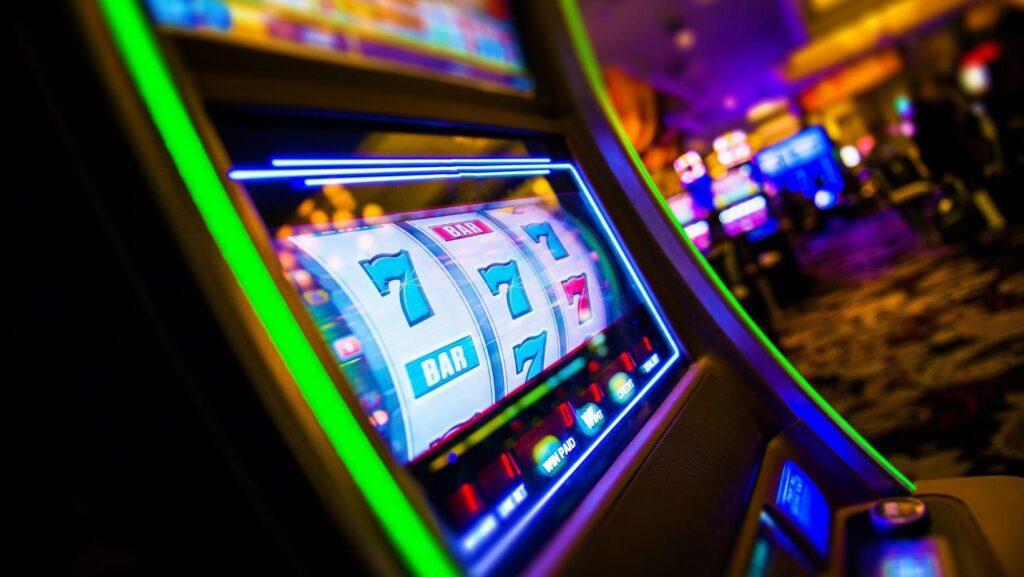
The three-reel slot has its place, but it’s a mostly nostalgic one, and one reserved for the pub. It’s not all that representative of online slots these days, which has since moved on. But it hasn’t totally moved into a new direction; it’s borrowed a lot from stuff you'll already recognise from the rest of your library.
Cascading wins are just match-3, dressed up
Cluster pays don’t use fixed paylines for grid-based matching. If you group enough adjacent symbols that they then clear, new ones drop in, and the chain can keep going on each new spin. So yeah, just like Bejeweled or Candy Crush, though these weren’t even the real first of their kind, either.
The maths differs, with escalating multipliers stacking rather than simply clearing board space. The visual resemblance helps explain the source of the design inspiration, although the underlying probability model remains specific to the slot.
Megaways is a roguelike wearing a different skin
Big Time Gaming's Megaways mechanic was seen in Dragon Born back in 2016, not too long ago, and became popularised through Bonanza the same year. It randomises the number of symbols on each reel every spin (sometimes six rows, sometimes two), changing the maths and the number of ways to win each time.
It's a similar idea to a roguelike like Hades or Slay the Spire runs on: procedural variance where no two runs (or spins) are quite the same shape, even though the underlying systems are identical. BTG liked the mechanic enough to actually patent it, then soon licensed it out to studios like Pragmatic Play and Relax Gaming once Evolution acquired the studio back in 2021. How time flies.
Variable-ratio systems and loot-box comparisons
Slot machines are often discussed as an example of a variable-ratio reinforcement schedule. Outcomes occur after an unpredictable number of spins rather than on a fixed pattern. A similar structure appears in loot box systems in games like Overwatch and CS:GO. The comparison can help examine how uncertain reward systems are designed, but it does not mean that users respond identically across different products or contexts.
Persistent themes over one-off spins
Presentation is another area in which modern online slots borrow conventions from video games. Book of Dead-style exploration themes, symbol tiers and some bonus rounds use structures that resemble item progression in other genres. These features shape the interface and narrative framing, but they do not change the fact that each spin is an independent, randomised event. Storytelling and progression can make the presentation appear more complex without altering the underlying probability model. This distinction matters when comparing the two media: similar visual or narrative devices do not make their rules, risks or outcomes equivalent. The theme remains a visual layer; the RNG still determines outcomes.
Same bones, better costume
Some of this reflects technical engineering, but much of the design language draws on mechanics developed across decades of video games. The comparison with Candy Crush and Fortnite is therefore most useful for tracing shared interface conventions, not for suggesting that slot products are more attractive or that borrowed mechanics improve outcomes. The similarities sit mainly in presentation, pacing and visual feedback, while the underlying systems and regulatory context remain distinct. This keeps the comparison descriptive rather than treating behavioural optimisation as a product benefit.
More Stories
What the 2026 Preakness Stakes Odds Tell Us About Each Contender
How to Make the Most of Bitcoin Casino Bonuses in 2026
Beyond the Spin: 5 Hidden Mechanics to Watch for When You Play Slots Online