
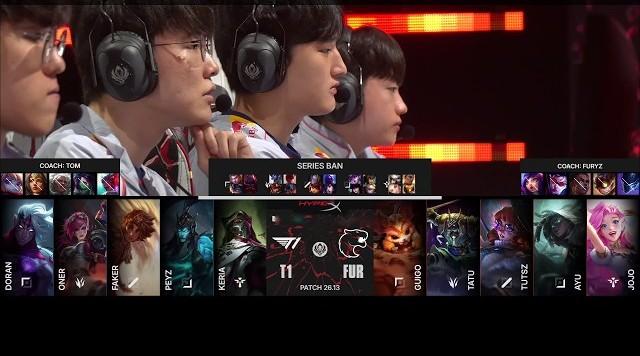
In mid-summer, the results of the regional LoL leagues often give the impression that the future champions are a foregone conclusion. Teams with strong records in the Group Stage automatically find themselves among the favourites for the Playoffs, and their winning streaks quickly become the main topic of discussion. However, the 2026 season revealed a different trend: a high win rate can mask issues that only become apparent during matches at the main tournament.
Hanwha Life Esports’ 3–2 victory over Bilibili Gaming in the 2026 MSI final demonstrated that strong performances in the regular season do not always guarantee trophies. Gen.G’s statistics in the 2026 LCK Cup looked impressive, but the team underperformed at other major tournaments. In this article, we’ll examine whether Mid-Summer League Records really matter, or whether they mask the strategic shortcomings of the favourites.
Early Dominance vs Micro-Adaptation in Fearless Draft
Teams such as Gen.G and T1 successfully concluded July’s competitive run; however, behind their impressive statistics lies a heavy reliance on standard lane synergies, which are easily countered during the later stages of the ban-pick phase. In the first 15 minutes, top-tier teams usually demonstrate a clear advantage over their opponents, but with a limited pool of champions to choose from, this pace slows down.
Whilst preparing for the decisive Playoffs at the Esports World Cup 2026, analysts studied the tournament schedule and dynamics in detail. When analysing the league of legends summer standings, it becomes clear that teams’ positions are largely based on results in major tournaments; however, few take into account the calibre of opponents and the match format. Taking Gen.G or T1 as examples, impressions of their play are formed mainly by their mechanical superiority in the first 15 minutes of the game. However, without basic statistics, it is difficult to assess the true consistency of a squad in the gruelling Bo5 series that are usually played in a tournament’s grand final.
According to the Liquipedia database, the average match time in LCK 2026 is 30-32 minutes, which requires teams to be flexible after the 25th minute. Teams like G2 Esports and Bilibili Gaming during MSI 2026 have already proven that they can overcome an early deficit through unconventional macro positioning. Therefore, the leaders of the summer split need to expand their champion pool to be ready for the opponent’s strategies.
The Illusion of Dragon Control and Voidgrubs Prioritization
Securing objectives is an important part of matches in LoL. In the early stage, this often creates the illusion of complete dominance, which collapses at the first major battle for Baron Nashor. At the MSI 2026 tournament, teams that obtained the first three Voidgrubs had a win rate of only 44.4%, while control of the Rift Herald provided a 62% win rate. Teams spend too many resources on the first dragons, leaving the side lanes without proper pressure.
Within the gaming community, users rightly highlight the importance of game updates. On the official League of Legends Game Updates page, you can read all the information about the latest patch, but professional teams interpret this information differently. To rack up a large number of wins in the summer split, you need to know every little detail, including the correct focus on neutral objectives and split-pushing strategies.
Analysts observations confirm: teams from the top-4 of the LPL region win 89.4% of matches after taking Baron Nashor, regardless of the number of dragons killed by the opponent. This indicates the fallacy of focusing on the Dragon Soul as the sole condition for victory.
Champion Pool Bottlenecks in Bo5 Series

The switch to Fearless Draft has exposed a critical lack of champion diversity among many top players. In the 2026 Summer Split, top players mostly played just four traditional champions. When these champions are banned during a Bo5 series, the players’ performance immediately suffers.
According to RFT.GG’s official report on MSI 2026, 101 unique champions were used across the 71 maps played. This is the highest level of diversity seen in the last three years of Riot Games’ international events. Teams that rely solely on just 20 meta picks suffer defeat as soon as a series goes beyond two maps.
Analysis of the macro-statistics of the LCK Cup 2026 shows that teams more often win in long-term series precisely due to a wider pool of champions. Unexpected peaks like Ziggs or Varus in unconventional builds disrupt the preparation of favorites, and summer records are usually formed in Bo3, where teams do not always reveal all strategies.
Predictable Macro Routing and Objective Traps
The predictability of junglers’ routes is another aspect to bear in mind. As all professionals know the exact timing for farming jungle creeps, it is difficult to devise any original strategy for junglers. This predictability allows high-level opponents to prepare counter-attacks in advance, right from the start of the game.
In the 2026 Summer Split, Hanwha Life had one of the highest average kills per minute (CKPM) figures; their high level of aggression enabled them to secure victories against teams outside the top 10. However, against disciplined defences, such chaotic play does not always lead to victory.
And of course, the main indicator of blowouts in summer matches was reckless team fights around the Elder Dragon. As mentioned above, players often focus too much on neutral objectives, forgetting about other important aspects of the game. Teams approach the Elder Dragon without saved wards, relying solely on individual skills. In Bo5 series, these mistakes are not so critical, but in Bo1 games they can decide the outcome of the match.
Matches of Nongshim RedForce and similar teams have shown that even underdogs are capable of producing interesting strategies and reading the game plan of top teams if they use the same timings. A lead in the standings makes the favorites relaxed, creating a false sense of security, and as a result, seriously motivated underdogs can achieve sensational victories.
Conclusion
The results of the 2026 Summer Split paint a somewhat misleading picture of the teams’ readiness for the year’s major tournaments. The high win rate of Gen.G or T1 certainly confirms their status as favourites, but it demonstrates primarily a mechanical advantage in the lanes rather than depth in macro-strategy. Success in modern League of Legends requires a broad pool of picks and tactical versatility, and teams that neglect the side lanes in favour of early dragons and rely on a formulaic style risk being knocked out of major tournaments as early as the first stage. To achieve a good result at Worlds 2026, teams must review their approaches to drafting and macro-discipline.
More Stories
Digital Transparency: How Live Video is Solving the Internet’s Trust Issue
Best Price Optimization Software for Car Parts Retailers in 2026
Before You Buy a Two in One Electric Toothbrush